
Warning: Disturbing photos of injured dog below.
I’ve been fostering dogs (and have my own boys) for over five years, and just when I thought I’d seen it all, this happens.
My foster dog, Eugene, suffered from an infection underneath his skin on the top of his head, which resulted in needing surgery to drain the puss and blood that built up inside his head and cut out some necrotic tissue. We waited a few days before taking him to the vet because we assumed it had been a bee sting (he’d been messing with a bee). The vet said had we waited much longer the infection could have reached his brain, “which would have been a death sentence.”
Now, the vet could not say for certain when or how it happened, but he said there is a very good chance it developed from being poked in the head with a rose thorn. In this case, he would have had Canine Sporotrichosis (if you want to learn more about this, this article is quite thorough). It also could have been an infection introduced by a insect bite or sting.
Later I saw his past medical history which outlined that he’d been found with many foxtails immbedded in his skin on his head and face as well as body and legs. When I got him these had all been removed and there wasn’t any evidence, but knowing this I think it’s more likely that he had an infection brewing from the foxtails and it just happened to worsen after he was in my care. I removed every single rose bush in my yard anyway, though.
Below is a timeline of the incident to give a sense of progression. I’m sharing this in case it’s helpful to anyone else. Don’t worry, he healed and is totally fine now!
Day 1: Noticeable swelling over one of his eyes.
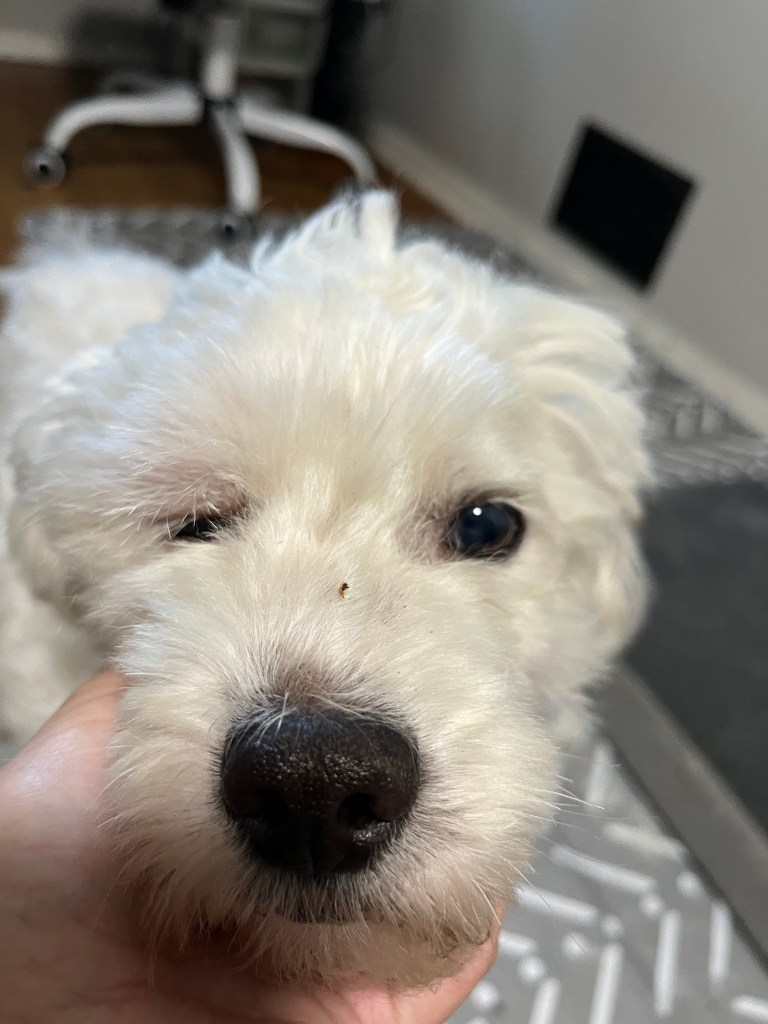
Day 2-3: Swelling doesn’t get better (and becomes more red) even after administrating multiple doses of Benadryl (we were operating under the assumption he’d been stung by a bee).
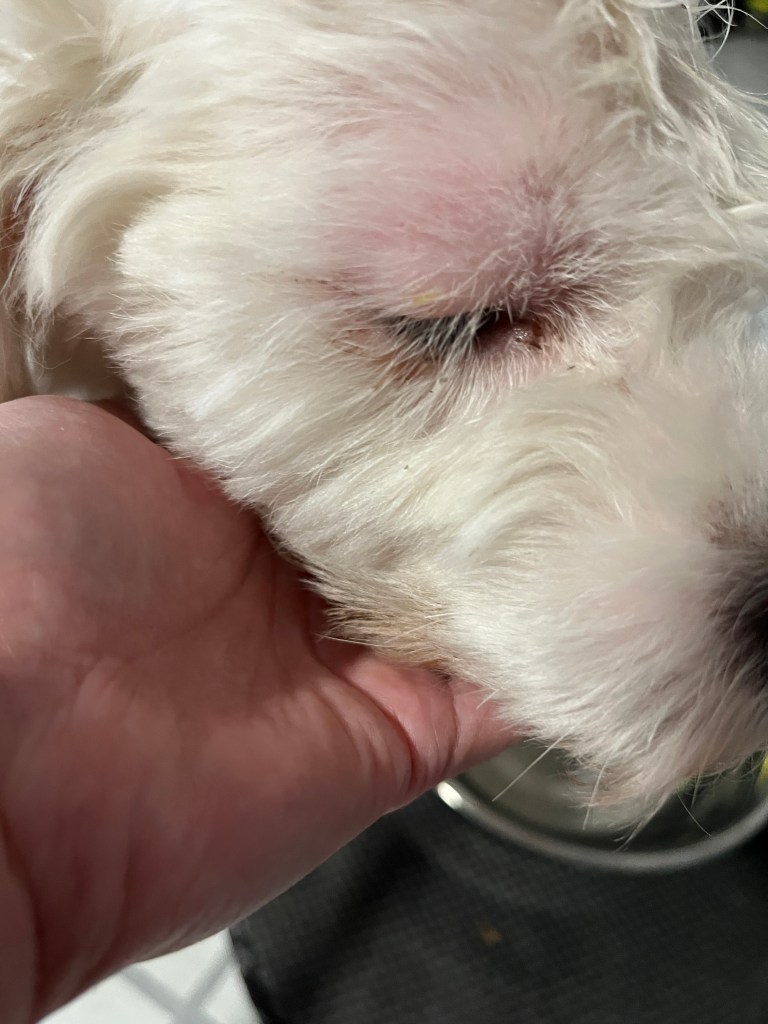
Day 4: The top of his head bursts open (“like a volcano” said the vet), blood and puss ooze from the hole in his head.
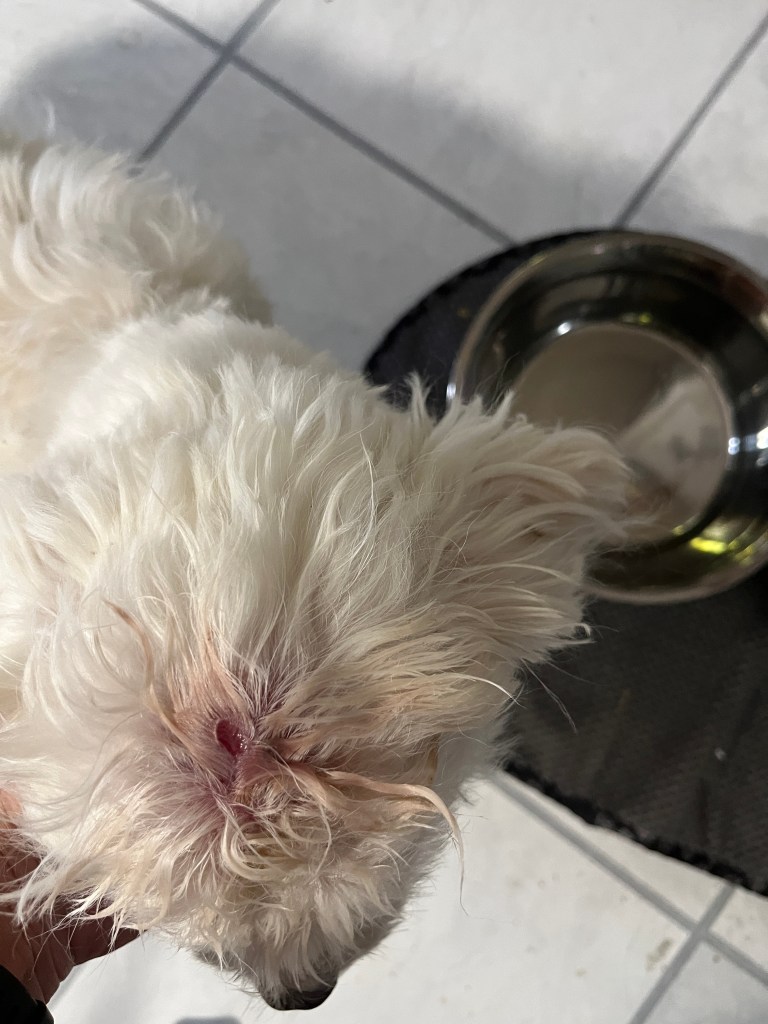
I take him to the vet. The vet drains all the puss (“so much puss” the vet said as he shook his head in dismay) and inserts tubes in his head to help with continued drainage over the next few days.
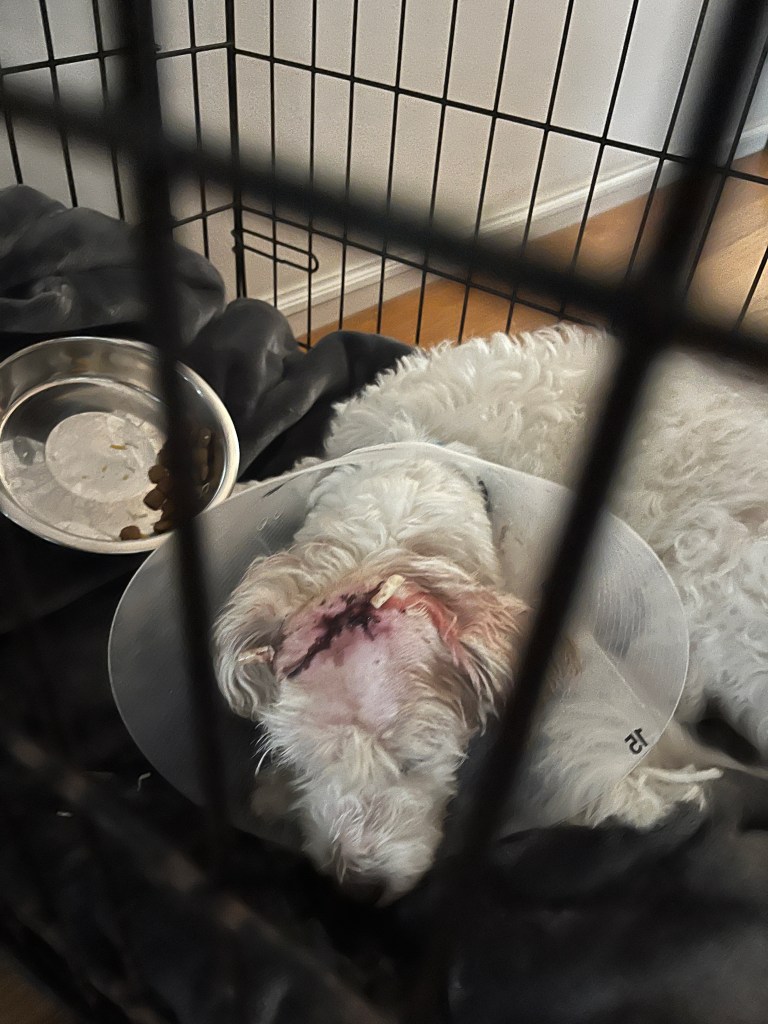
Day 5-8: He recovers at home and I take him back to the vet on Day 8 to have the tubes removed from his head. The top area around the initial “burst” hole is scabby and still oozy.
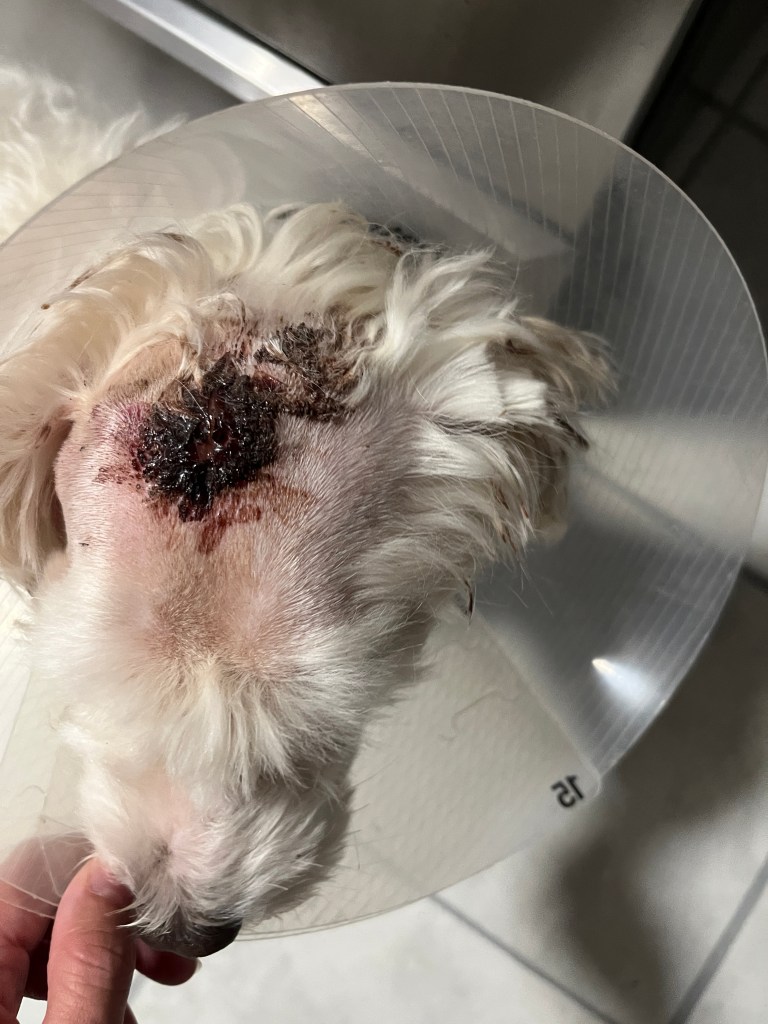
Day 11: The scabbing mostly dries out but a hole still remains.
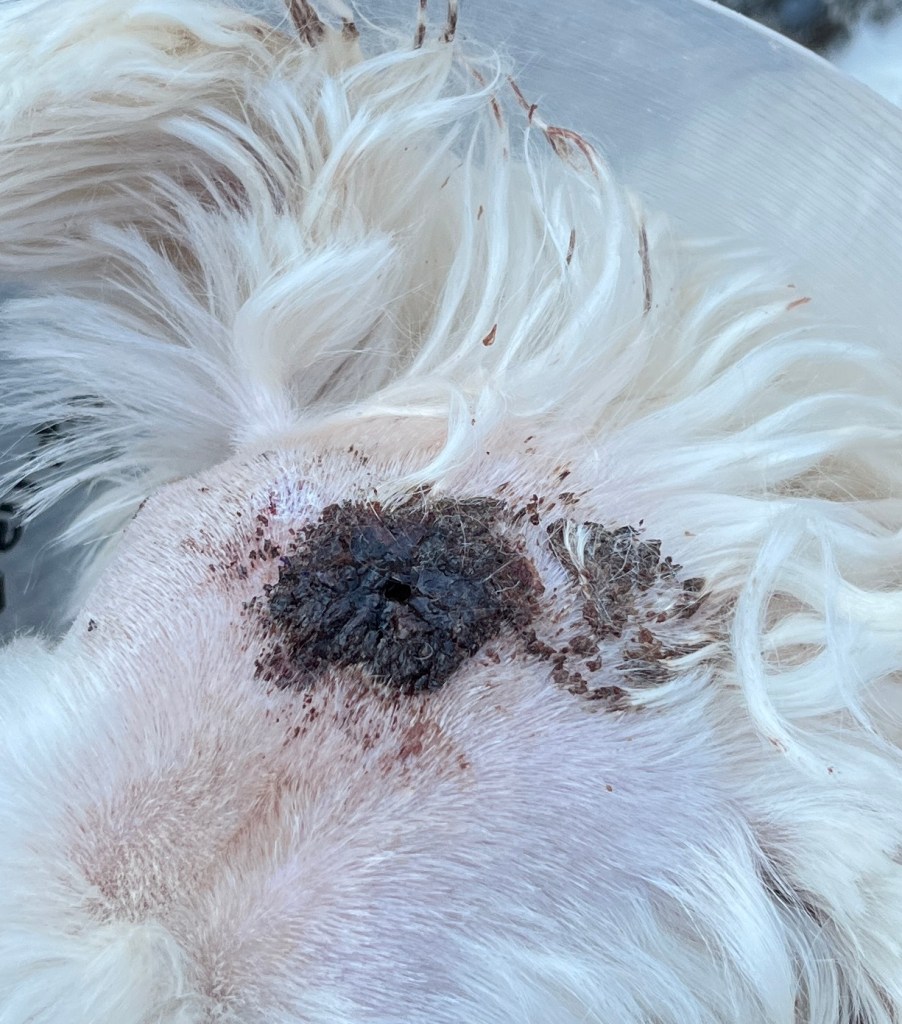
Day 13-15: He shakes his head vigorously and part of the scab breaks open, revealing the mess underneath, then slides off completely. I take him back to vet and he says it’s fine, but prescribes him another round of antibiotic just to be safe. The scab does re-form.
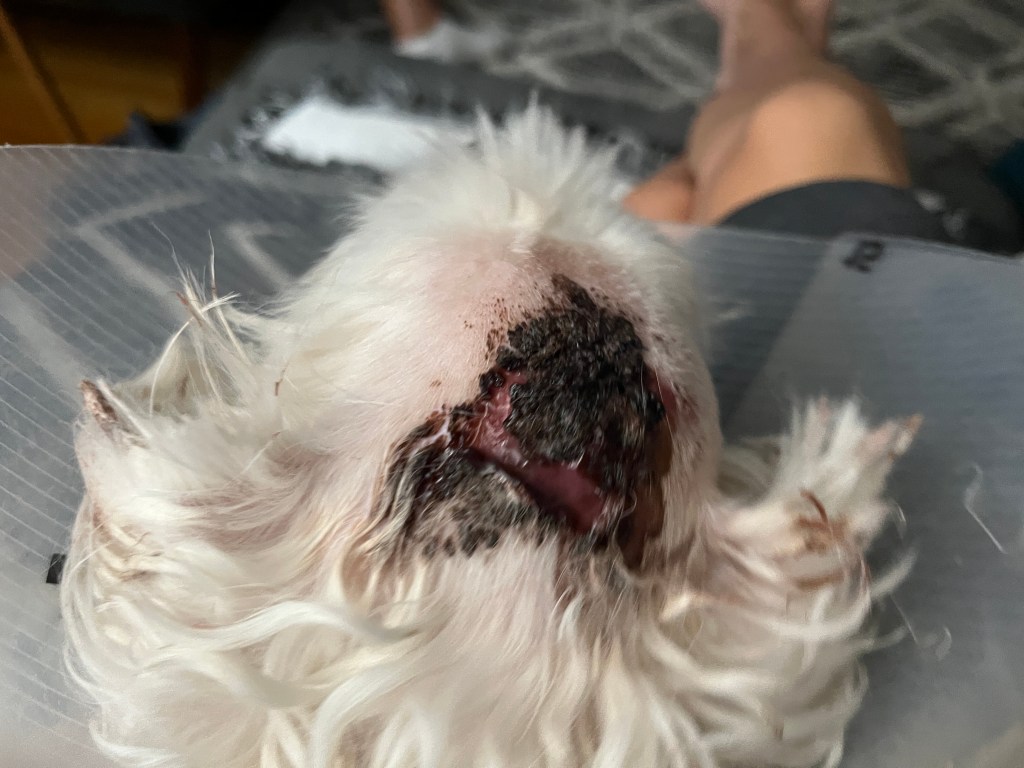
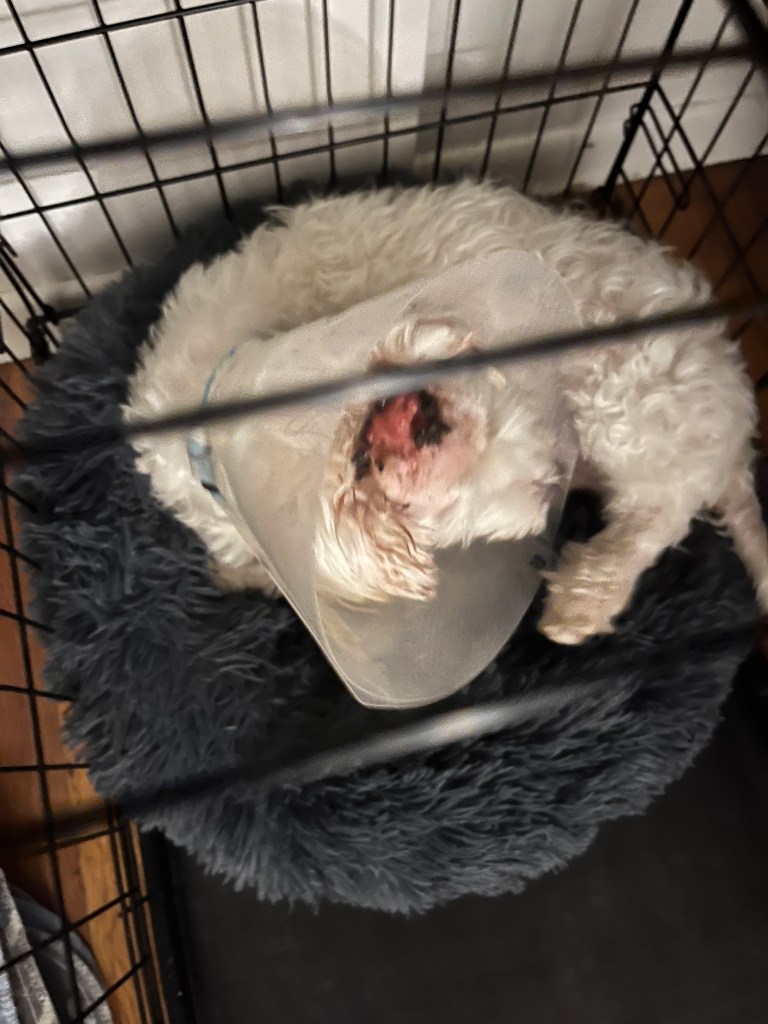
Day 19: The scab falls off on its own, revealing mostly healed skin and two stitches that will need to be removed by the vet.
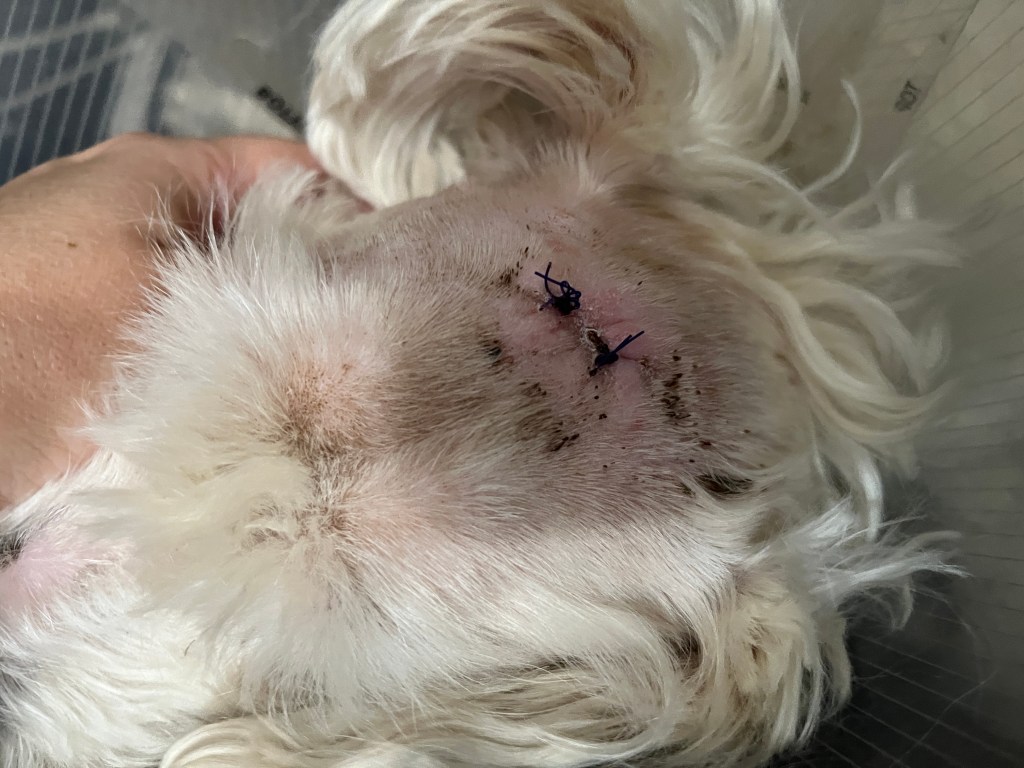
Day 23: Looking good!
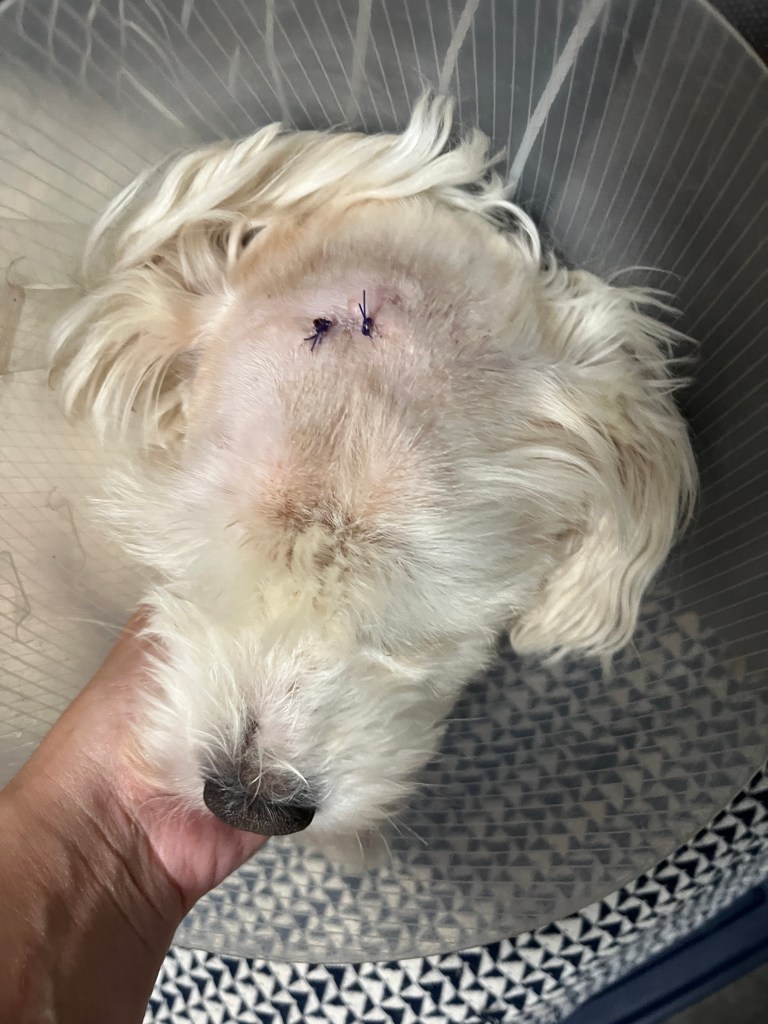
Day 29: The stitches are removed by the vet.
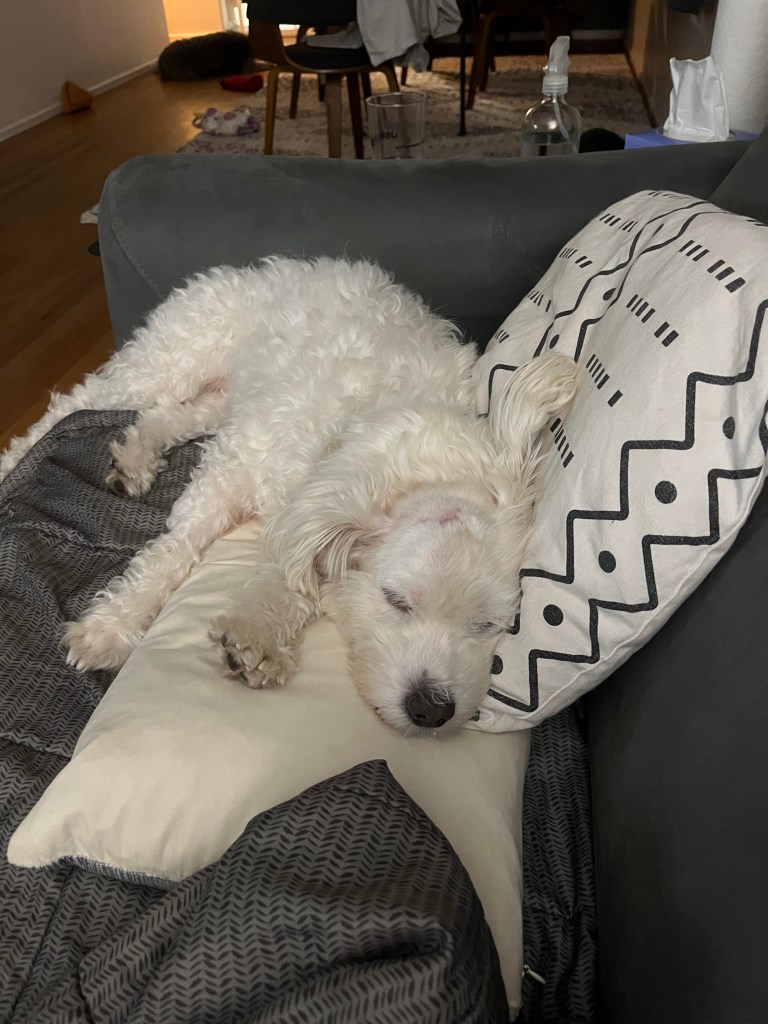
Over time the hair grew in more and he was good as new!
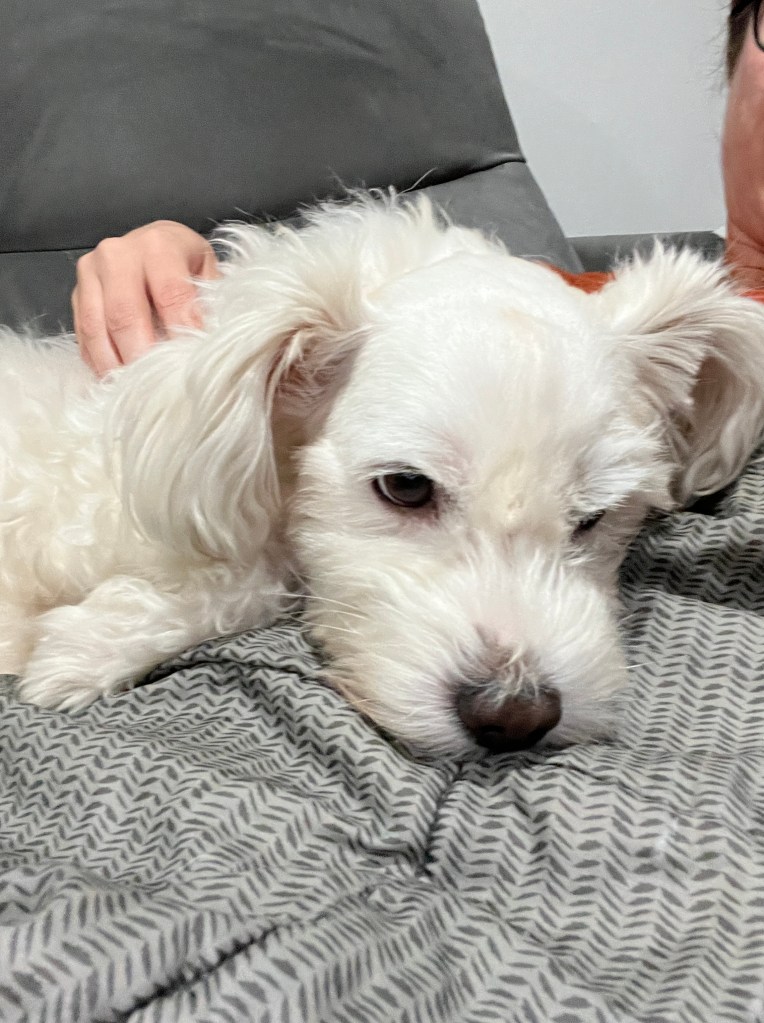
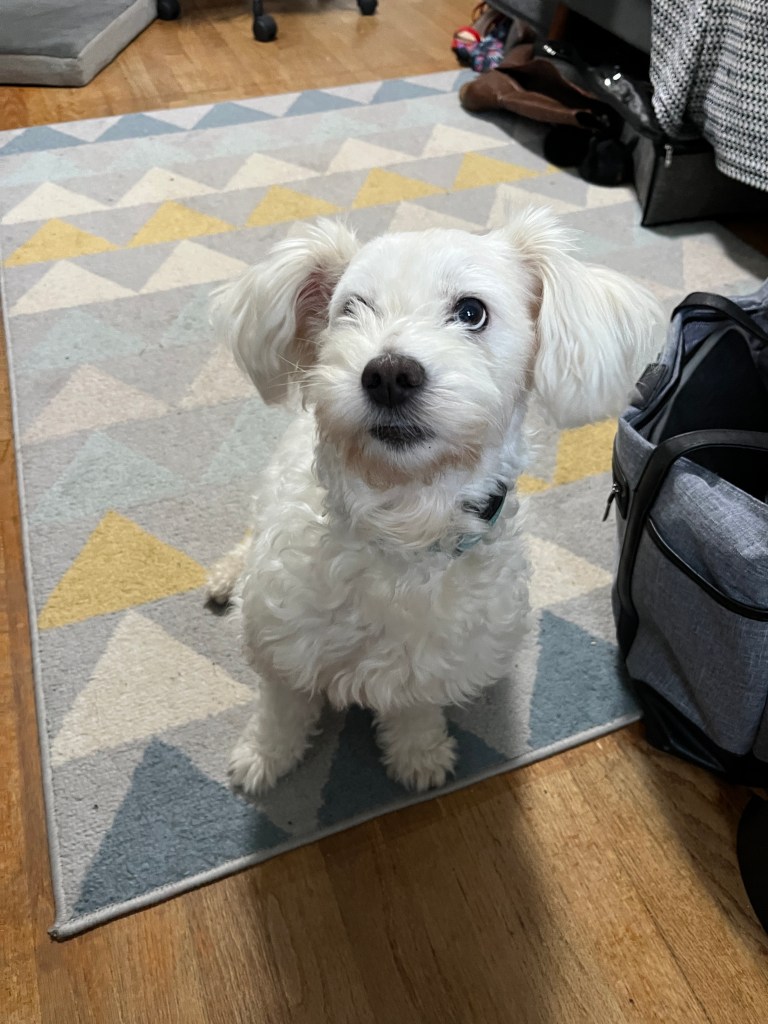
Over a month later he was all better and looking handsome. He was eventually adopted to a very nice couple.
 aussiedoodleadventures.com